

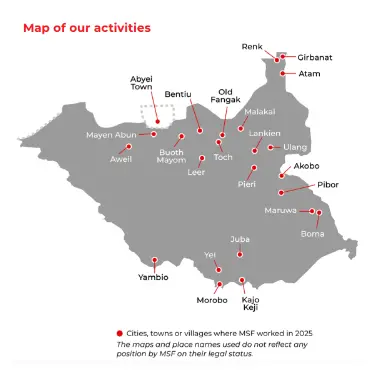
Between October 2024 and October 2025, MSF responded to cholera in all of its projects, and opened additional emergency interventions, including in Juba, treating over 35,000 patients across nine states – over one-third of all cases reported nationally. A specialised cholera treatment unit was opened at Renk county hospital, treating 500 patients by August, while 1,414 cases were treated in Abyei in 2025. In Pibor, we treated 1,167 patients for cholera. The rapid spread of infectious diseases was driven by population movement – including displacement due to violence – as well as limited surge capacity and chronically under-resourced WASH services.
By November 2024, cholera had reached Malakal, in Upper Nile state, a major transit point for new arrivals from Sudan. MSF teams ran two treatment centres in Malakal county, treating over 600 patients between November 2024 and February 2025. In Bentiu, MSF set up a number of oral rehydration sites and operated 250 cholera beds across its specialised treatment centre in the IDP camp and the Ministry of Health’s Bentiu state hospital until August. This period saw almost 7,000 cases, with 3,240 patients hospitalised.
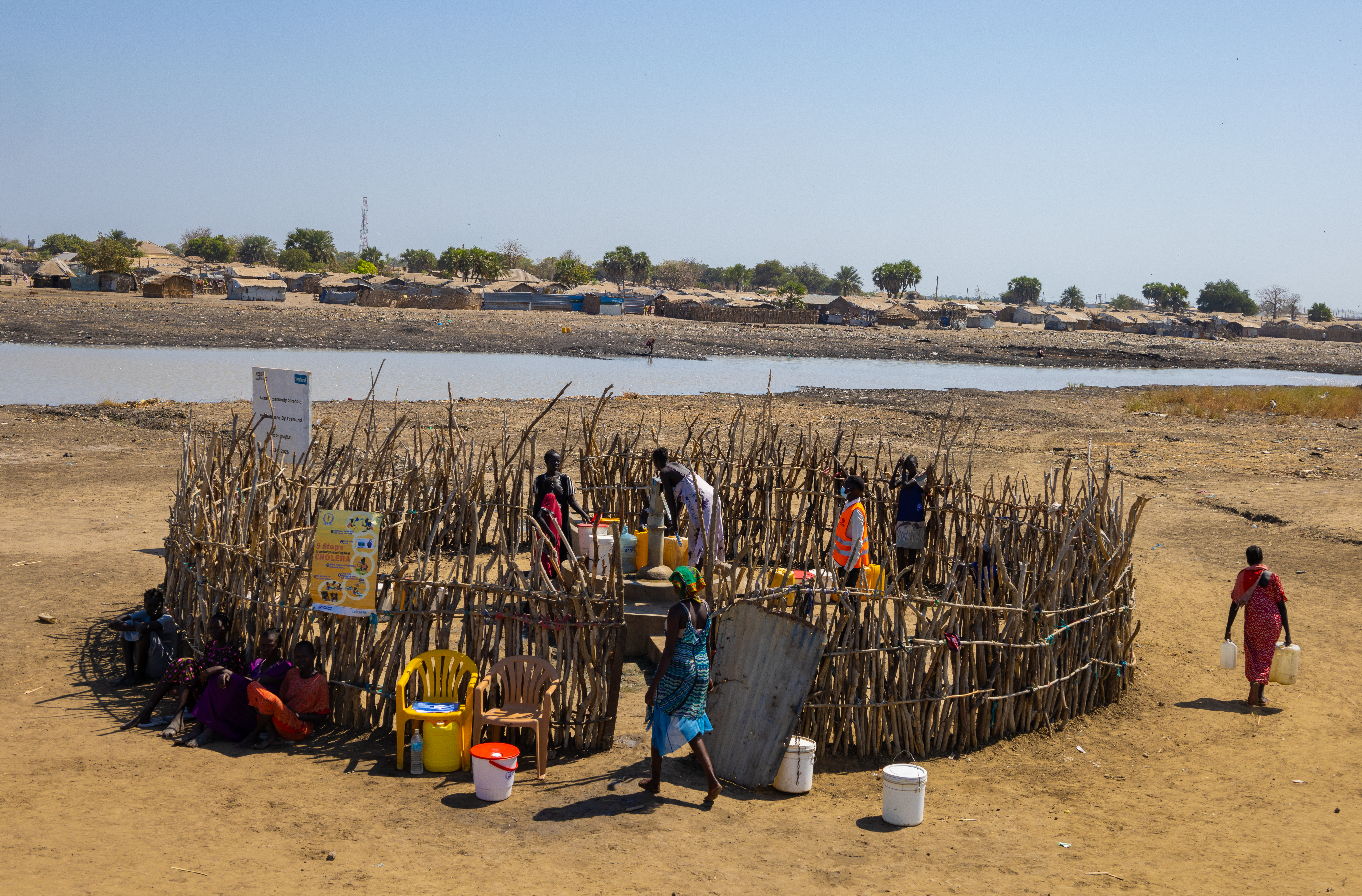
South Sudan’s WASH sector is chronically underinvested, with recent funding cuts exacerbating the situation. In Bentiu IDP camp and informal displacement sites around Bentiu town, which host thousands of people, the combination of devastating floods in 2021, the influx of refugees from Sudan since 2023, and reduced funding for essential WASH services have contributed to a worsening situation. Fangak county, affected by severe flooding in 2024 and 2025, lacked latrines and clean water; people were forced to drink contaminated floodwater shared with animals.
By the end of June 2025, MSF’s cholera response was ongoing in several key locations including Bentiu, Lankien, Pieri and Abyei. Collaborative efforts to improve access to clean water and WASH facilities are vital to reduce the spread of cholera and prevent outbreaks in the future. Additionally, strengthening healthcare infrastructure, enhancing disease surveillance and response systems, and providing timely access to cholera vaccines can significantly mitigate risks.


